
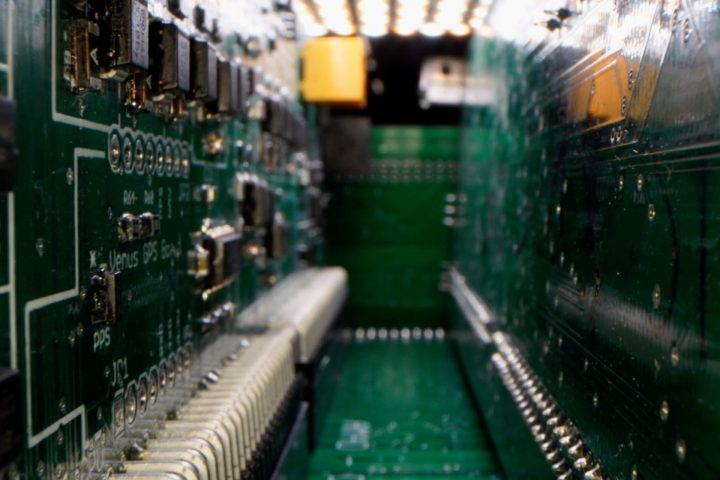
One of the areas of investigation during the test runs will be to understand the vibrations which occur throughout the car at different speeds. Vibrations will be created through many different sources, to name a few; acoustic vibrations from the jet engine, vibrations transmitted through the suspension from the wheels travelling over the ground, aerodynamic vibrations created by the air flow passing over the various shapes of bodywork and the combined residual imbalance of all the rotating components. Structural / Vibro-acoustics is a complex field of Engineering involved with identifying and tuning out damaging resonance which can occur when multiple sources of vibrations combine over a whole structure.
During the Thrust SSC record breaking programme, vibrations were responsible for causing the onboard computers to issue an Abort Run message at which point Andy Green, the driver, shut down the jet engines mid run. After a lot of searching, it was eventually determined that the PCB’s (printed circuit boards) must be actually vibrating out of their slots to break contact and then settling back into the slots as the car slowed making the problem very difficult to trace! The problem was solved by replacing some older computer board mounts and a lot of soldering. You may have noticed onboard video footage of Thrust SSC often went black this was due to the video tape being vibrated off the recorder’s heads.
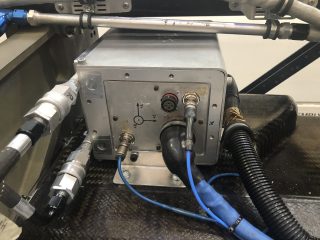
As the Bloodhound has been designed with the benefit of all the experience of the Thrust SSC project, our Engineers wanted to ensure that the same problem doesn’t occur. Improvement in PC technology means that modern components are assembled in a much more robust manner and on Bloodhound, many are surface mounted to prevent them becoming disconnected or throwing up error codes. In addition, the computer boxes now have accelerometers onboard so the actual vibrations can be recorded. Initial anti-vibration mounts have been used in assembly – but these will only be effective if the vibrations are in the estimated range – and can actually work against you by amplifying the vibrations if they are not!
So, as the speed increases, the Engineering team will be monitoring the frequency of the vibrations and where necessary, changing the anti-vibration mount material to more finely tune them to reduce the risk of electronic errors.
In addition to protecting the electronics from vibrations, the car also has accelerometers strategically placed to detect unwanted structural vibrations which are much more important….. more about those in a later article….


