
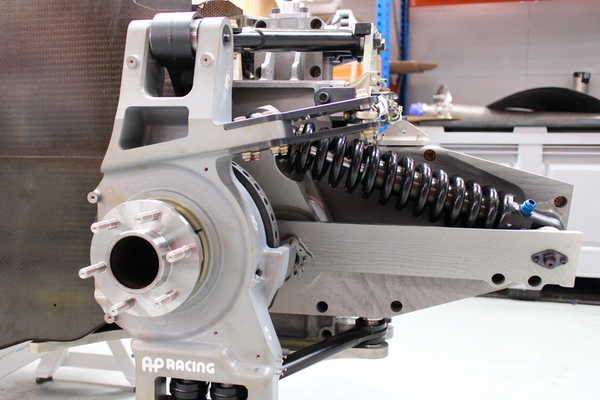
Nothing on this car is normal – and the design brief for the disc brakes is no exception.
Bloodhound’s primary high speed braking systems are the air brakes and parachutes. The disc brakes are then used at the very end of each high speed run to actually stop the vehicle. They can only be used below 200mph as the heat energy created above these speeds is simply too high. Indeed, one of the reasons Andy has a speedometer in the car is to ensure he doesn’t apply them too early. However, while he won’t use them above 200mph, they still need to be capable of coping with the maximum vehicle speed, which is obviously much faster – meaning they have to be OK spinning up to around 10,500rpm.
During the Newquay test runs, the car was fitted with carbon/carbon brakes on all four wheels. This was because the car only had a relatively short distance in which to achieve full engine reheat and then stop. The demand on the disc brakes in the desert is actually much lower, which means they have already had their hardest test – and passed!
Earlier this moth Ian Warhurst met with AP Racing’s MD, David Hamblin and Head of Sales, Richard Gregory, to again confirm AP Racing’s commitment to the Bloodhound LSR project.
AP Racing, which designed and supplied the brakes, is now looking at the design requirements for the high speed test and record runs. The criteria are very different. For a start, we will not be using rear brakes. Also, initial calculations, plus previous testing carried out on carbon discs, suggest that the wheels will exceed the maximum spin speed for the carbon material, so this means using steel discs.
As we no longer need rear brakes, this gives us two spare carbon discs which we can test as part of our engineering review to discover the maximum spin speed they can withstand and their breaking point – so that should be an exciting test! Previous tests were carried out using F16 and Typhoon brake discs. These were solid, whereas the carbon racing discs we used at Newquay are vented. It will be interesting to see how they fare.
In addition to the redesign of the discs and pads, AP Racing is also giving the callipers a full service. The braking system had to work extremely hard during the 10 high speed runs at Newquay in 2017, slowing the 5 tonne vehicle from 200mph to zero as quickly as possible. Before we head to the desert, they will be fully inspected, serviced and reconditioned or replaced as necessary. This involves removal of the front suspension as the rear half of the calliper is actually machined into the uprights to save space – but that’s OK as they were being taken off for other work anyway.
Make sure you’re on our Supporters’ Club mailing list to read the results of the disc tests and any further work on the braking systems.


